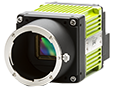
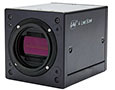
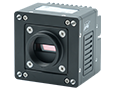
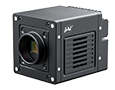
Traditionally, line scan cameras have been associated with high-end, specialized applications where precision and speed are essential. However, as technology advances, line scan cameras are increasingly being adopted across a broader range of mainstream applications, driven by innovations in sensor technology, interface options, and the demand for more compact and efficient systems.
On this page
As Pioneer 10 spun through space during its 1973 flyby of Jupiter, it carried one of the earliest digital line scan imaging systems ever used for planetary exploration. Instead of capturing a complete image at once, the spacecraft’s sensor recorded a single line of pixels at a time. As the spacecraft rotated and moved past the planet, these individual lines were assembled sequentially, building a complete image of Jupiter pixel by pixel. This pioneering approach transformed a simple scanning sensor into a digital mapping system, laying the foundation for the line scan camera technology widely used today in machine vision, Earth observation, and space exploration.
The introduction of Charge-Coupled Device (CCD) sensors marked the first major leap forward for line scan technology. Compared to earlier imaging systems, CCD sensors offered significantly higher sensitivity, lower noise, and improved image quality. These advantages made line scan cameras practical for industrial inspection, where products move continuously through production lines. By capturing high-resolution images of paper, textiles, semiconductors, and printed materials, CCD line scan cameras helped manufacturers detect defects at speeds impossible for human inspectors. What began as an experimental imaging concept in space was now becoming a valuable industrial tool.
While early line scan cameras were limited to monochrome imaging, the introduction of color line scan technology opened entirely new inspection possibilities. Using tri-linear CCD sensors with dedicated red, green, and blue sensor lines, these cameras could reconstruct full-color images of moving objects. This breakthrough enabled manufacturers to inspect not only shape and contrast but also color, print quality, material variations, and surface appearance. Industries such as printing, packaging, food processing, textiles, and wood inspection quickly adopted color line scan systems, expanding the role of machine vision across production environments.
Over the last two decades, line scan cameras have evolved from specialized inspection tools into a cornerstone of modern machine vision. Advances in CMOS sensor technology have enabled higher speeds, greater resolutions, and lower power consumption, while powerful processors and high-bandwidth interfaces allow real-time image analysis. Modern line scan systems now incorporate features such as color imaging, multispectral sensing, 3D measurement, and Short-Wave Infrared (SWIR) imaging. Today, line scan cameras inspect everything from semiconductor wafers and battery electrodes to food products, pharmaceuticals, and recycled materials. What started as a pioneering experiment to map Jupiter pixel by pixel has become one of the most widely used imaging technologies in industrial automation.
One of the key trends in the evolution of line scan cameras is the move towards more compact designs. As production environments become more dynamic and space constraints more common, there is a growing need for smaller, more streamlined imaging solutions. Modern line scan cameras now offer compact form factors that allow for easier integration into tight spaces, making them suitable for a wider range of industrial settings. Additionally, this shift towards smaller designs is also driven by cost considerations. As the size of the cameras decreases, so does the cost of production, making these advanced imaging solutions more affordable and accessible for various applications.
The miniaturization of line scan cameras is made possible by significant advancements in sensor technology. Shrinking pixel sizes now allow for higher resolutions within the same sensor format, while innovations like backside illumination increase the light sensitivity of these smaller sensors. For instance, next-generation sensors feature pixel sizes as small as 3.5 by 3.5 microns, enabling 4K resolution within a C-mount format. Additionally, the proliferation of new, cost-effective interfaces such as 5GE and CoaXPress 6 has significantly increased maximal line rates, offering up to five times the speed of traditional 1GE interfaces without a significant cost increase.
As sensor technology evolves, the cost of manufacturing line scan cameras continues to decrease. By manufacturing more sensors from a silicon wafer of the same diameter, the unit cost is reduced, enabling lenses with smaller diameters to achieve equivalent optical performance at a lower cost. The widespread availability of C-mount lenses and competition among manufacturers further drive down costs. Additionally, improvements in LED technology have increased light efficiency, reducing the overall cost of the vision system. These factors make high-performance line scan cameras more affordable and accessible for a wide range of applications, from barcode reading to vegetable sorting.
In addition to advancements in traditional imaging, there is a growing interest in extending line scan camera technology beyond the visible spectrum. Areas such as UV imaging, near-infrared (NIR), and shortwave infrared (SWIR) are becoming more accessible due to improvements in sensor technology. These once complex and expensive technologies are now more compact and easier to integrate, allowing for a broader range of applications in industries like electronics inspection, food sorting, and pharmaceutical quality control.
The integration of powerful FPGAs in modern line scan cameras has also opened new possibilities in digital signal processing. This enables more advanced image correction algorithms and pre-processing, allowing for the development of more advanced machine vision systems capable of handling increasingly complex tasks.
Line scan cameras capture images one line at a time at very high speeds, making them ideal for continuous processes where objects move rapidly, such as on a conveyor belt. This capability is essential for applications like sorting, quality control, and surface inspection, where real-time, high-resolution imaging is critical. Unlike area scan cameras, which capture an entire frame in a single shot, line scan cameras are better suited for applications where continuous imaging is required or where the Field-of-View is limited. This unique advantage is expanding their use beyond traditional high-end applications to more entry-level and mainstream markets.
The evolution of line scan cameras is driving a significant shift in how these tools are used across industries. Once confined to high-end, specialized applications, they are now becoming a vital component in mainstream industrial environments, thanks to innovations in technology and a growing demand for compact, efficient imaging solutions.
As line scan cameras continue to advance, their impact will only increase, offering new possibilities for improving efficiency, accuracy, and overall performance in a wide range of applications. Whether in quality control, surface inspection, or sorting, the future of line scan cameras is bright, with the potential to revolutionize the way industries approach machine vision.
Steel metal and coin inspection.
Label inspection
"Unwrapping" of cylindrical items such as bottles, cans, pens etc., for 360-degree label inspection
Color sorting and quality inspection
Color sorting and quality inspection of jelly bears.
Print inspection of bank notes
Sorting of lumber
Sorting of lumber by color and grain pattern, color matching on laminates and other flooring products.
Sorting of vegetables
Sorting and quality of carrots, potatoes and other vegetables.
Food sorting
Inspection and separation
Inspection and separation of valuable mineral ores from waste rock.
Sorting and inspection
Sorting and inspection in recycling and waste streams.
Film inspection
Steel metal and coin inspection
Paper Surface inspection
Glass inspection
PCB inspection
Semiconductor inspection
Wood inspection
Print inspection
Flat panel display inspection
As line scan cameras become more compact and affordable, their applications continue to expand. The ability to capture high-resolution images at high speeds makes them an invaluable tool in environments where precision and efficiency are essential.
Moreover, the trend toward miniaturization and increased mobility is opening up new opportunities for line scan cameras in markets that were previously dominated by larger, less efficient systems. Smaller, more mobile cameras are not only easier to integrate but also consume less power, making them ideal for modern industrial applications that demand both flexibility and performance.
Single-Sensor Monochrome
Monochrome CMOS sensor line scan cameras with an excellent combination of high resolution and fast scan rates. Resolutions up to 8192 pixels and line rates up to 200 kHz.
Single-Sensor SWIR
SWIR line scan cameras featuring advanced InGaAs sensors for reliable material differentiation and inspection beyond the visible spectrum.
Trilinear & bilinear color
Trilinear and bilinear cameras delivering line scan color images for applications that don't require the ultimate color precision provided by JAI’s prism line scan cameras.
3-Sensor R-G-B (Prism)
3-sensor CMOS R-G-B color line scan cameras with state-of-the-art prism technology providing the best possible performance, precision, and versatility for line scan color imaging.
4-Sensor R-G-B+NIR (Prism)
4-sensor line scan cameras designed to simultaneously capture R-G-B image data in the visible light spectrum and image data in the near infrared (NIR) light spectrum.
4-Sensor R-G-B+SWIR (Prism)
4-sensor line scan cameras designed to simultaneously capture R-G-B image data in the visible light spectrum and image data in the short wave infrared (SWIR) light spectrum.
2-Sensor SWIR+SWIR (Prism)
Prism based dual-sensor InGaAs line scan camera for Short Wave InfraRed (SWIR) light.
Need help – let us help you to find the perfect line scan camera
Our camera experts are here to assist you so you can take full advantage by pairing the right JAI camera with the right lens.