Request a quote

Area Scan Cameras

Single-sensor and multi-sensor area scan cameras

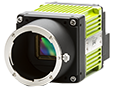
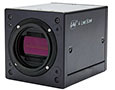
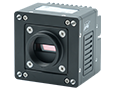
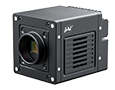
JAI provides a wide selection of industrial machine vision cameras with both single-sensor and multi-sensor configurations. Resolutions range from 2.35 MP to 45 MP, with high frame rates ranging up to 253 fps for full 5MP resolution. A selection of cameras can operate beyond the visible – in the ultraviolet (UV), the near infrared (NIR), and the short wave infrared (SWIR) light spectrums.

JAI Area Scan Cameras

Single-Sensor Monochrome

A broad offering of monochrome single-sensor area scan cameras with CMOS sensors including the latest Sony Pregius sensors.

Explore the series

Single-Sensor SWIR

Single-sensor SWIR area scan cameras with advanced InGaAs sensors for enhanced material differentiation and defect detection beyond the visible spectrum.

View cameras

Single-Sensor Color

A wide selection of color single-sensor area scan cameras with CMOS sensors including the latest Sony Pregius sensors.

View cameras

Single-Sensor UV Sensitive

JAI offers several UV-sensitive area scan cameras to fit specific resolution, speed, and optical requirements.

View cameras

2 and 3-Sensor Color + NIR (Prism)

JAI's multi-sensor, multispectral prism cameras provide simultaneous images of visible and NIR light spectrums through a single optical path.

View cameras

3-Sensor – R-G-B (Prism)

3-CMOS prism-based RGB area scan cameras provide better color fidelity than traditional Bayer cameras.

View cameras

An area scan camera, also known as matrix cameras, is an industrial imaging device that captures a full two-dimentional image in a single frame. An Area scan camera uses a rectangular image sensor with pixels arranged in rows and columns to capture images, which makes it ideal for measuring or inspecting slow-moving objects.

Area scan cameras, use a rectangular CCD or CMOS image sensor with pixels arranged in rows and columns to capture images. Incoming light is projected onto the full sensor array, where it is converted into electrical signals and processed into a digital image. Depending on the sensor architecture, image capture occurs either with a global shutter, where all pixels are exposed simultaneously, or with a rolling shutter, where pixels are exposed sequentially row by row.

An area scan camera is ideal for machine vision applications involving stationary or slow-moving objects, including PCB surface inspection, precision dimensional measurement, barcode and label reading, semiconductor and electronics inspection, food quality control, robotic guidance systems, and more.

The required resolution for an area scan camera depends on your specific machine vision application, including the object size, field of view, and the smallest features or defects that must be detected. Selecting the right megapixel count ensures accurate inspection, measurement, and defect detection without unnecessary data load. JAI offers high-performance area scan cameras ranging from 2.35 megapixels up to 45 megapixels, providing scalable solutions for everything from general industrial inspection to high-resolution precision imaging.

An area scan camera is typically used when the items that are being inspected, sorted, or analyzed have definite shapes or boundaries. For example, when you need to inspect individual, 3-dimensional items like fruit, boxes or printed circuit boards, an area scan camera, which uses a matrix of pixels to create a 2D image of each object, will most likely be your choice.

In some situations, area scan cameras can be used for imaging of continuous, moving objects but only by capturing discrete overlapping images. This may require considerable processing effort to “stitch together” the pieces for proper analysis.

Line scan cameras, on the other hand, are most effective when you need to inspect long, continuous items, or a variety of items that have many different lengths or sizes. For a more detailed explanation and side-by-side examples, see our area scan vs. line scan camera comparison.

Read more about area scan vs. line scan cameras

Case studies and blog about area scan cameras

Blog

Cameras for Sports Imaging

Camera technology has been an important part of the sports world ever since the advent of television. Large, broadcast cameras have become a familiar sight at most sporting events enabling sports fans to enjoy the action from thousands of miles away.

Read the blog
Case study

Wafer inspection

In electronics manufacturing, accurate processes are a prerequisite for flawless products. Leader Vision, a machine vision distributor and system designer for customized projects based in Taiwan, has developed a wafer OCR reading system using JAI cameras to ensure the smooth production of wafers in one of Taiwan’s world-class semiconductor foundry companies

Read the case study
Case study

Thermal pads inspection

In an inspection facility for the electronics industry, a JAI Go-X Series CMOS camera ensures that thermal pads bonded to an aluminum heat sink are present and have been perfectly positioned at the intended location.

Read the case study
Case study

Color inspection in automotive or medical

With the MSC 8X8 multispectral camera, PANOVOTEC has developed a new type of system for photometric analyses with high resolution and short measurement times. The use of two filter wheels opens up a previously unattainable flexibility for the combination of color filters in order to obtain even more color information. A high-resolution camera from JAI with a 45-megapixel sensor ensures optimal image capture.

Read the case study
Case study

Autonomous vehicles

Autonomous racing is an evolving and popular sport among engineering students worldwide who compete against each other to develop the best self-driving race car. In this highly technical competition, lap times and top speeds are the criteria that make the difference between victory and a close second place. The most important technology that determines success in that field is machine vision.

Read the case study
Case study

Spectral imaging enables fruit yield estimation

Accurate fruit yield estimation early in the growing cycle allows fruit growers to plan and optimize many aspects of their businesses, from growing through picking and packing to marketing. Early yield estimation requires green fruits to be counted within the green canopy by using unique wavelengths to distinguish between the fruits and the canopy.

Read the case study
Blog

Improving food safety and quality in fruit sorting and grading

Fruit and vegetable sorting has evolved far beyond surface-level inspection. As food safety regulations tighten and quality expectations rise, producers need inspection technologies that can detect internal defects, subtle material differences, and hidden contamination at full production speed.

Read the blog
Blog

Multispectral cameras for fluorescence endoscopy

It has been proven over the years that modern endoscopy has relatively few risks and delivers detailed images in a short amount of time. Endoscopy as a method has been found to be useful in investigating a wide range of internal physiological systems.

Read the blog
Blog

Machine vision cameras for VR in live concerts

Virtual reality is not only making inroads in actual high-end science and technology, but also in ways that affect the life of everyday people from interactive gaming and data-driven sports broadcasting, to video conferencing, education & training, and live music & concerts.

Read the blog

Which Area Scan Camera is the best fit for your needs?

Selecting the right industrial area scan camera starts with understanding your application requirements. Key factors such as resolution, frame rate, interface, and sensor type play a critical role in determining the best solution for reliable and accurate image acquisition.

Depending on your system needs, different interface options offer distinct advantages. GigE Vision enables easy integration and scalability, while Camera Link and CoaXPress support high-speed data transfer for demanding inspection tasks. USB Vision provides a flexible and cost-effective option for compact systems.

Choosing the appropriate sensor technology is equally important. Whether your application involves imaging beyond the visible spectrum, detecting subtle material variations, or ensuring precise color reproduction, the right sensor will significantly impact inspection performance and overall system efficiency.

Find your ideal area scan camera using our camera selection guide.

Need help – let us help you to find the perfect area scan camera

Our camera experts are here to assist you so you can take full advantage by pairing the right JAI area scan camera with the right lens.

Contact a JAI engineer